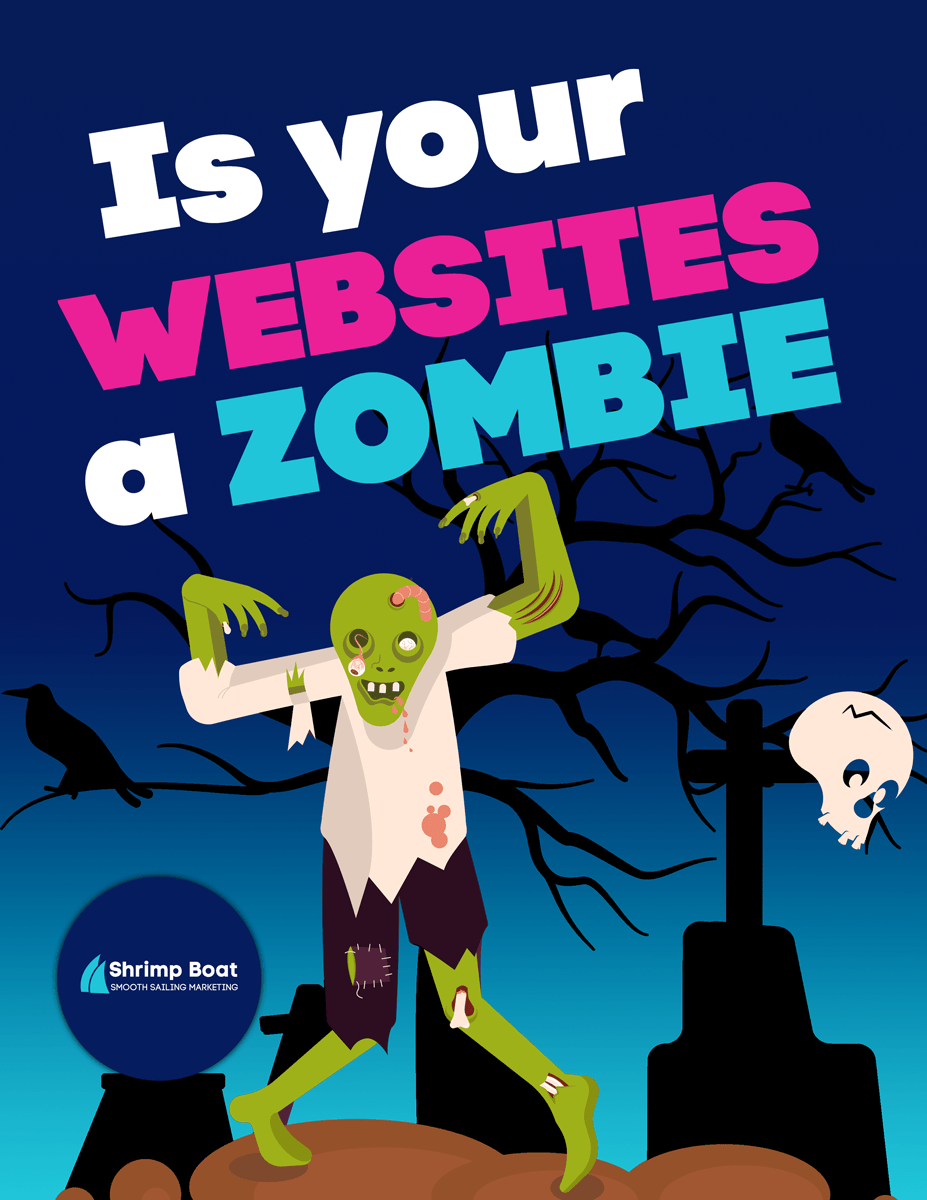
You know them when you see them. Lurking on page two of Google search results, featuring a blog post from 2019, team photos of people who no longer work there, and a design that screams early 2010s. They’re zombie websites. Technically alive, but effectively dead. And if you’re a business owner in Rochester Hills, Troy, Auburn Hills, or Shelby Township, there’s a real chance yours might be one of them.
This isn’t just a cosmetic issue. An outdated website costs you customers, damages your credibility, and in some cases opens your business to serious security risks. For local businesses competing in the Metro Detroit market, that’s a problem you can’t afford to ignore. Let’s break down exactly what’s happening, and what you should do about it.
What Is a Zombie Website?
A zombie website is one that exists but no longer functions effectively as a business tool. It’s online, you can visit it, but it’s doing more harm than good. Here are the telltale signs:
- 🧟 The last blog post was published years ago (2019 is a common one)
- 🧟 The design looks like it was built when Internet Explorer was still relevant
- 🧟 It doesn’t work properly on mobile devices
- 🧟 There are broken links, missing images, or contact forms that go nowhere
- 🧟 It still runs on outdated technology like Joomla 2.x or an ancient WordPress theme
- 🧟 Stock photos of people in suits pointing at whiteboards dominate the homepage
- 🧟 The messaging no longer reflects what the business actually does
- 🧟 Page load times are slow enough to brew a pot of coffee
Sound familiar? You’re not alone. But that’s not an excuse to ignore it.
The Numbers Don’t Lie: What an Outdated Website Is Costing You
Businesses often treat their website as a one-time expense rather than an ongoing asset. Here’s what the data says about that approach:
Visitors leave fast and they don’t come back. An outdated design is one of the top reasons users leave a website immediately. Studies show that 88% of online consumers are less likely to return to a site after a bad experience. That’s not a bounce rate. That’s a reputation.
Mobile traffic is over 62% of all internet traffic. A non-responsive website (one that doesn’t adapt to smartphones and tablets) means you’re failing more than half your visitors before they even read your first sentence. According to recent data, a non-responsive website is the second most common reason users abandon a site.
Speed kills conversions. A page loading in 1 second converts at nearly 40%. That rate drops significantly with each additional second of load time. If your site takes 5+ seconds to load, you’re losing a substantial portion of potential customers before they’ve seen anything.
People make snap judgments. Research consistently shows that users form an opinion about a website within milliseconds. If your design looks dated, visitors assume your business is dated, or worse, that you’re not operating anymore.
Nearly 1 in 3 shoppers won’t visit a business that lacks a credible website. A zombie website may actually be worse than no website at all, because it actively destroys trust.
The Joomla Problem (and Other Outdated Technology)
Let’s talk about the elephant in the room: outdated content management systems.
Joomla was once a popular choice for building business websites. In the mid-2000s through early 2010s, it powered millions of sites and was considered a solid alternative to WordPress. Today, it holds roughly 2.5% of the CMS market, and a large chunk of those sites are running old, unmaintained versions.
The problem isn’t just that Joomla looks dated. It’s that old Joomla installations are a security liability. Outdated software is a key attack vector, and once hackers find a vulnerability, they exploit it at scale.
A real-world example: Shrimp Boat recently redesigned the website for Pawlak Pipes, a maker of handcrafted briar pipes. Their previous site was running on an outdated Joomla installation: slow, difficult to manage, and increasingly vulnerable. The redesign on a modern platform resulted in immediate traffic growth and a noticeable increase in sales. You can read the full case study at myshrimpboat.com.
Joomla isn’t the only culprit. Outdated WordPress themes, abandoned website builders, and legacy platforms all carry similar risks. The principle is the same: if it isn’t maintained, it becomes a liability.
Security: The Risk Nobody Talks About
Most business owners think of website security as something that only matters for large companies or e-commerce sites. That’s a dangerous assumption.
Small businesses are the target of approximately 43% of all cyberattacks. And only around 14% of small businesses say they’re sufficiently prepared to defend against them. When you’re running an outdated CMS with unpatched plugins and expired security certificates, you’re essentially leaving the door unlocked.
Here’s what can happen when a website is compromised:
- Customer data gets stolen, including basic contact form submissions that expose names, email addresses, and phone numbers
- Your site gets used to distribute malware to your visitors
- Search engines detect the compromise and delist your site (goodbye, SEO rankings)
- Your business email domain gets blacklisted
- You spend weeks, and potentially thousands of dollars, on cleanup and reputation repair
According to security research, approximately 39% of attacked CMS sites were running outdated software. And nearly half of compromised sites had backdoors installed. That means even after the initial breach was noticed and cleaned up, the attacker still had a way back in.
The cost of a breach far exceeds the cost of a properly maintained website. This isn’t a scare tactic. It’s basic risk management.
What Potential Customers See (And Think)
Let’s put ourselves in the shoes of a potential customer, say a business owner in Troy searching for a reliable service provider, or a Shelby Township company looking to upgrade their marketing. They Google you. They land on your website.
Here’s what goes through their mind in the first few seconds:
- “Is this company still in business?” If the last activity on the site is from years ago, that’s a legitimate question.
- “Can I trust them?” A visually dated site signals that the business may not invest in quality or professionalism.
- “Will they be able to help me?” If a business can’t maintain its own digital presence, can it really be trusted to handle your project?
- “Let me check their competitors.” And then they’re gone.
This isn’t speculation. Research shows that 13% of customers who have a bad website experience will tell 15 or more people about it. Word-of-mouth cuts both ways, and in the tight-knit business community across Oakland and Macomb counties, a bad impression travels fast.
What a Modern Website Should Do
A good website isn’t just an online brochure. It’s your best salesperson: working 24/7, never calling in sick, never having an off day. Here’s what it should be doing for you:
- Load fast and work flawlessly on mobile. Over 62% of web traffic is mobile. If your site isn’t built for it, you’re not in the game.
- Clearly communicate what you do and who you serve. Visitors should know within 5 seconds whether you can help them.
- Have working contact forms, calls to action, and clear next steps. If it’s hard to reach you, they’ll reach your competitor instead.
- Feature fresh, relevant content. Even quarterly blog updates signal to both visitors and search engines that you’re active.
- Run on a secure, maintained platform. SSL certificates, updated plugins, and regular backups aren’t optional anymore. They’re baseline.
- Reflect who you actually are today. Not who you were five years ago, not stock photos. Just real, current, honest representation of your business.
How to Know If It’s Time for a Redesign
Here’s a quick audit. Answer honestly:
- When did you last update your website content? (Not a typo fix, actual new content.)
- Does your site look good on your phone?
- How long does it take to load?
- When was the last time someone filled out your contact form or called from your website?
- Does your website CMS get regular updates, and do you actually apply them?
- Is your site’s messaging still accurate for your services, pricing, and audience?
If you struggled to answer any of those, or didn’t like your answers, it’s probably time to have a serious conversation about your website.
Bringing Your Website Back to Life
The good news: a zombie website can be resurrected. But it takes more than a fresh coat of paint.
At Shrimp Boat, based in Rochester Hills, the approach starts with strategy: what does the website need to do for your business? Not just what does it look like, but how does it function, who does it serve, and what action should visitors take? From there, the process moves through modern design, clean development, and a platform that’s built to be maintained.
The Pawlak Pipes redesign is a good example. It wasn’t just about making things look better. It was about building something that actually worked: faster load times, mobile-optimized layout, updated content, and a CMS that the client could actually manage. The results showed up quickly in traffic and sales.
A website redesign doesn’t have to be a massive, painful undertaking. Done right, it’s a strategic investment that pays back through better leads, more credibility, and a business that looks as good online as it is in person.
Shrimp Boat works with businesses across the area, from Rochester and Troy to Auburn Hills and Shelby Township. If your business is anywhere in Metro Detroit and your website needs resuscitation, the conversation starts the same way: figuring out what your site needs to actually do for you.
The Bottom Line
Your website is often the first impression your business makes. In a competitive market like Metro Detroit, where businesses in Troy, Rochester, Auburn Hills, and Shelby Township are all fighting for the same local customers. That impression matters more than ever. A zombie website doesn’t just fail to attract customers. It actively drives them away.
If your site is running on outdated technology, hasn’t been updated in years, doesn’t work on mobile, or just doesn’t reflect the business you’ve built, it’s time to check the pulse.
Ready to bring your website back to life? Let’s chart a course together.